
The Department for Education issued its School Estate Management Standards in April 2025.
This is the third in a series of blogs focussing on the Level 1 Baseline requirements which all schools are expected to have achieved.
The School Estate Management Standards extract below states the information that schools should have regarding their buildings.
| Area | Activities |
| Understanding and managing your land and buildings | You hold core data to help you manage the estate. This includes:· an asset register· information relating to tenure· accurate information about building areas· a statutory compliance register· an asbestos management plan· sufficiency data· information relating to running costs· the number of buildings on each site· a scaled building layout plan· the number of floors in each building· energy efficiency data including CO2 emissions and energy cost data |
Start with the basics
Many schools lack basic information about the buildings on their site which can be an obstacle to ensuring that they are well maintained or when building improvements or alterations are required. If you have a mix of different aged buildings, ensuring you have basic building information is even more important because one size of planned preventative maintenance doesn’t fit all buildings! So, where should you start when collating building information? Start by completing this basic spreadsheet:
| Name of building | Age* | Roof type | No of storeys* | GIFA* | Lease arrangement | Landlord | Lease details |
| Pitched, flat or curved | m2 | Freehold or leasehold | |||||
| Example:English block | 1991-2000 | Pitched | 1 | 389 m2 | Leasehold | Local Authority | 125 years from 1.1.15 |
Information marked with an asterisk in the table above can be found in your school’s Condition Data Collection report (CDC2) which you will have received from the Department for Education (DfE). For academies, the other information can be found in your Land & Buildings Collection Tool annual submission to the DfE.
How basic information informs maintenance requirements
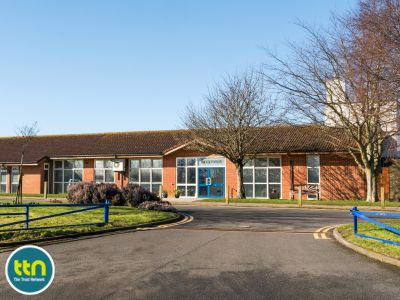
Gathering this basic information will give you a very high-level insight into your buildings’ maintenance requirements. For example, if you’ve got a flat roof on a building that’s over 25 years old, it’s probably going to need a high level of maintenance, if not replacement, in the near future.
If you have older buildings, that is Victorian buildings and those built up to the 1970s, you can find details of particular construction methods in the DfE’s document Managing older building: a guide for estates maintenance staff (December 2025). This document gives an overview of the different types of construction methods, such as traditional (brick built), HORSA buildings, and CLASP system builds amongst others. The document also details particular risks associated with such buildings with links to further information.
Statutory information
By law landlords and building users, which includes schools, are required to have various inspections carried out and certificates or reports evidencing this. Examples of such information include fire risk assessments, asbestos management surveys, Legionella risk assessments, gas safety certificates, fire alarm inspections and testing, emergency lighting inspections and testing, portable electrical appliance testing, and fixed electrical installation inspections. Once inspections reports have been received, you need to ensure that any actions recorded on them are carried in the appropriate timescales.
Building information required for capital projects
Capital projects, whether new build additions, improvements or alterations to existing buildings, all start with information such as measured building surveys, electrical information, heating pipework runs, water system schematics, drainage systems, asbestos management surveys for blocks built before 2000, and fire exit strategies and compartmentation information. If you don’t have this information, you will need to spend time and money engaging consultants to provide it for you. For new buildings, some of this information will be contained in the Operations & Maintenance (O&M) manuals. The O&Ms will also contain maintenance information for the plant and equipment installed in your building so it’s a valuable source of information.
It’s a legal condition of the Construction (Design & Management) Regulations 2015 that the Principal Designer for any project provides a health and safety file to the school, which includes the O&Ms. If you haven’t got a copy of the O&Ms, then carry out a thorough search for paper or electronic copies, but if you can’t find them then contact whoever managed your capital project and ask them for a copy.
With regard to your building’s water assets, your Legionella risk assessment should contain a schematic drawing as well as detailed information on individual water assets and their location. If you don’t have information regarding your site’s surface water and foul water drain runs, it is worth investing in paying a consultant to provide these. Drainage is an area that is paid little attention until there is a problem with it, and the last thing you want if for sewage to be backing up into your building or grounds. Another area which is often overlooked is that of fire compartmentation. Modern buildings are designed with specific areas which can contain the spread of fire, but if any alterations are made to a building, then additional fire or smoke detection may be required.
The importance of building asset registers
It’s not easy to maintain your building assets if you don’t have the relevant information about them such as the maintenance regime for your boilers, for example. This is why it’s important to:
- Record all your building assets on a register – This might be a simple spreadsheet or an online facilities management system.
- Find out where the planned preventative maintenance information is held – This might be in your O&M manuals, and/or the manufacturer’s guidance. If you don’t have either, then search the internet and see what you can find.
- Collate all existing servicing and maintenance documents – Use these to compile an action list of any remedial works that need to be carried out, and to record the last time the asset was serviced.
- Devise an asset maintenance plan for each asset – Online facilities management systems should have the ability to remind you in good time before an asset needs maintenance so that you can book contractors in accordingly.
- Distinguish between statutory compliance tasks and maintenance tasks – By law some assets need to be inspected within a set timescale. An example would be passenger lifts which under the Lifting Operations & Lifting Equipment Regulations (LOLER) 1998 need to be inspected every 6 months. Other assets need to be maintained to keep them in good working order such as clearing roof gullies and gutters regularly.
- Know your asset’s life cycle – Identify how long your asset is expected to last and plan for its replacement accordingly.
References
- https://assets.publishing.service.gov.uk/media/6853da3ed5e318ffbfba2ad6/School_estate_management_standards_amended.pdf
- https://assets.publishing.service.gov.uk/media/693ada7fcfacd5e888491e27/Managing_older_buildings_a_guide_for_estates_maintenance_staff.pdf
Previous Articles In This Series
- https://www.thetrustnetwork.org.uk/2025/12/15/budgeting-for-the-school-estate/
- https://www.thetrustnetwork.org.uk/2025/11/07/the-importance-of-asset-management-plans/
About The Trust Network
Established in 2014, The Trust Network is an independently run peer network, dedicated to good school estates management. We are managed by our members and for our members and share best practice and knowledge through regular events and webinars. We provide a single voice to discuss issues at a national level with the DofE and other national agencies.
Members will receive TTN News and Updates via our regular newsletters, opportunities to network and access to free resources, events and webinars. Not a member yet? Join The Trust Network today!
