
This blog is the fifth in a series focussing on the DfE’s School Estate Management Standards (published April 2025) Level 1 Baseline requirements which all schools are expected to have achieved. The extract from the Standards below states the information that schools need to be aware regarding building, alteration and refurbishment works.
| Area | Activities |
| Health and safety | You know your duties as a client under the Construction (Design and Management) Regulations 2015 and the Building Regulations. |
What are the CDM Regulations?
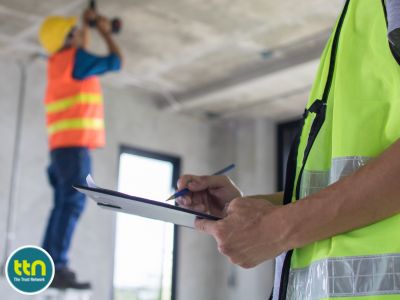
The Construction (Design and Management) Regulations, usually referred to as the CDM Regulations, is the main set of regulations for managing health, safety and welfare when works are being carried out. All new builds projects, demolition works, refurbishment, extensions, conversions, repairs and maintenance fall within the scope of the CDM Regulations.
The CDM Regulations set out various roles, and schools needs to be aware of the following roles:
- The Client – Organisations for which works are being carried out.
- The Designer – Organisations that prepare or modify designs for a building, product or system relating to the works.
- The Principal Contractor – The organisation in control of carrying out the works and which has responsibility for co-ordinating the work of other contractors involved.
- Contractors – Those who carry out the works or part of the works.
But how does this work in practice and where do the Buildings Regulations come in? Let’s take a boiler replacement and heating distribution replacement project in a school building as an example. If this is a project which your Trust is funding, or using its School Condition Allocation funding, or funding from a Condition Improvement Fund application, then your Trust is the Client. The Designer will be the organisation which designs the heating system. A Contractor might be the specialist company that the Principal Contractor employs to carry out a refurbishment asbestos survey before work commences. The Principal Contractor will coordinate the work of all workers on site whether from their own company or sub-contractors.
Trusts need to be aware that failure to appoint a Designer, Principal Contractor and Contractors, will mean that the Trust is held responsible for any duties that should be undertaken by those roles under the CDM Regulations. This is a critical risk as very few Trust estates employees would have the relevant qualifications and expertise to carry out these roles.
How to comply with the CDM Regulations
Your Trust, as the Client, needs to carry out the following actions:
- Appoint suitably qualified persons to carry out the roles. For major construction or refurbishment projects, your Trust should appoint a professional building consultant to oversee the works.
- Make suitable arrangements for managing and organising the works. This will include providing your Principal Contractor with the following information:
- DBS certificate requirements.
- Who to arrange site visits with.
- Signing in and out procedures.
- The use of personal protective equipment whilst on site.
- Parking arrangements for contractors’ vehicles.
- Acceptable delivery times and delivery routes around your site.
- School operating times.
- Asbestos management procedures.
- Information on any other hazards that may impact on the works such as buried services or overhead cables.
- Fire evacuation procedures.
- The need for risk assessments and method statements to be provided to the Trust before any works commence.
- Use and safe storage of contractors’ equipment on site.
- Safe system of work permits.
- Hot work permits (if applicable).
- Arrangements for storage of contractors’ materials.
- Ensuring areas are left in a safe and suitable state at the end of each day.
- Arrangements for welfare facilities for contractors.
- Behaviour rules for contractors whilst on site.
- The chain of command between the Trust and the Principal Contractor regarding instructions and decisions.
- Allow sufficient time for the design and planning of the works to be carried out properly and to be completed. We’re all aware of the rush to get works completed by the end of August in readiness for the start of the new academic year, but both your Trust and your Principal Contractor need to be realistic regarding what can be achieved.
- Ensure regular communication with the Principal Contractor. For major work projects this should include regular and scheduled meetings with your professional building consultant and your Principal Contractor. Daily meetings should also be held between the Premises Manager and the Principal Contractor’s foreman on site to ensure any issues are communicated and addressed promptly.
- Management of health and safety risks on site. Ensure that your Principal Contractor has drawn up a plan detailing how health and safety risks will be managed on site. This needs to be shared with the Trust and the Premises Manager on site and agreed before any work commences.
What are the Building Regulations?
Building Regulations are national standards for England and Wales which mandate the standards to which building works must be carried out. Building control is the method by which those standards are enforced ensuring that building works are safe, well-built and energy efficient. It is the role of a building control inspector to assess whether or not a project complies with the Building Regulations. All construction, alteration and refurbishment projects in schools must comply with the Building Regulations. Your Principal Contractor will be responsible for such building control issues and should appoint a suitable organisation to manage this aspect of any works.
Going back to our earlier example of installing a new boiler and heating distribution system in a school building, the Designer under the CDM Regulations will ensure that the design of the heating system complies with Building Regulations and should check the design with the building control organisation before works commence. During the works and on completion, a building control inspector will visit site to check that the works are being carried out in accordance with the design, and therefore, conforms to building regulation requirements.
References
Health & Safety Executive – Managing health and safety in construction – Construction (Design and Management) Regulations 2015
https://www.hse.gov.uk/pubns/priced/l153.pdf
Department for Education – Building regulations approval
Previous Articles In This Series
- https://www.thetrustnetwork.org.uk/2025/11/07/the-importance-of-asset-management-plans/
- https://www.thetrustnetwork.org.uk/2025/12/15/budgeting-for-the-school-estate/
- https://www.thetrustnetwork.org.uk/2026/01/20/the-importance-of-building-information/
- https://www.thetrustnetwork.org.uk/2026/03/18/building-condition-surveys/
About The Trust Network
Established in 2014, The Trust Network is an independently run peer network, dedicated to good school estates management. We are managed by our members and for our members and share best practice and knowledge through regular events and webinars. We provide a single voice to discuss issues at a national level with the DofE and other national agencies.
Members will receive TTN News and Updates via our regular newsletters, opportunities to network and access to free resources, events and webinars. Not a member yet? Join The Trust Network today!
